
If you’ve ever had a solar installer tell you “Sorry, your roof isn’t south-facing, so solar won’t work for you,” you’re not alone. Many homeowners across the UK are led to believe that unless they have a perfect, unobstructed south-facing pitched roof, they have to miss out on cutting their electricity bills.
Here is the reality: you do not need a south-facing main roof to generate your own clean electricity with modern alternative solar panel installations.
1. Flat Roof Extension Solar Arrays
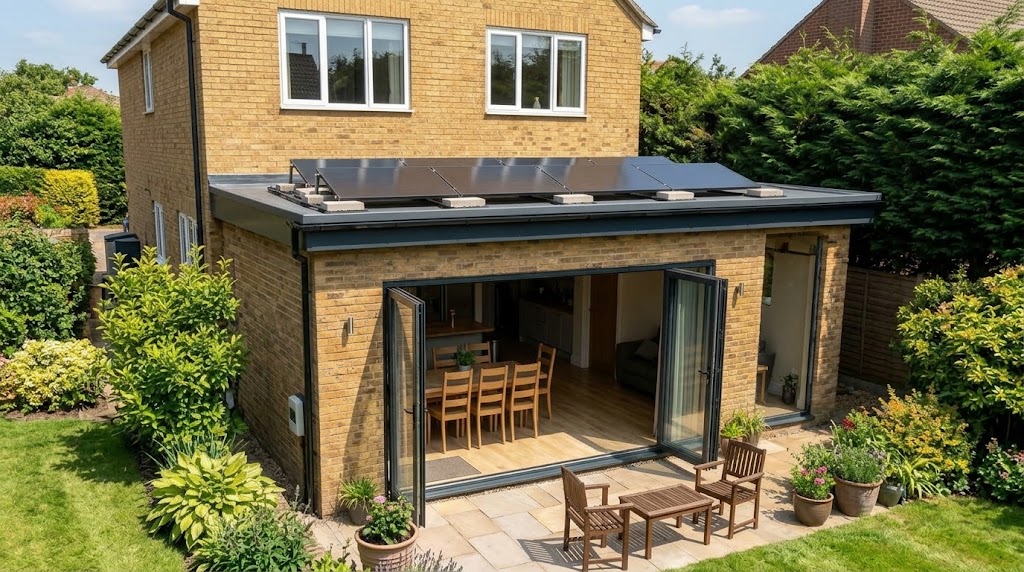
Single-storey kitchen extensions, dining conversions, and flat-roof garages are prime real estate for a high-yield solar setup. In many respects, flat roofs offer distinct engineering advantages over conventional pitched roofs:
- Custom Tilt and Azimuth: Pitched roofs lock your panels into whichever direction the building faces. On a flat roof, specialised mounting frames (A-frames or console tubs) tilt the modules at the ideal 30° to 35° angle, pointing directly true south for peak output.
- Non-Invasive Ballasted Racking: Modern flat-roof mountings do not require drilling through your waterproof membrane. High-density ballast blocks secure the array firmly against UK wind loads, eliminating any risk of future water leaks.
- Safer, Simple Maintenance: Keeping your panels free of leaves and bird fouling is much safer and more accessible on a single-storey flat roof than working high on a two-storey ridge.
2. Garden Sheds and Outbuildings
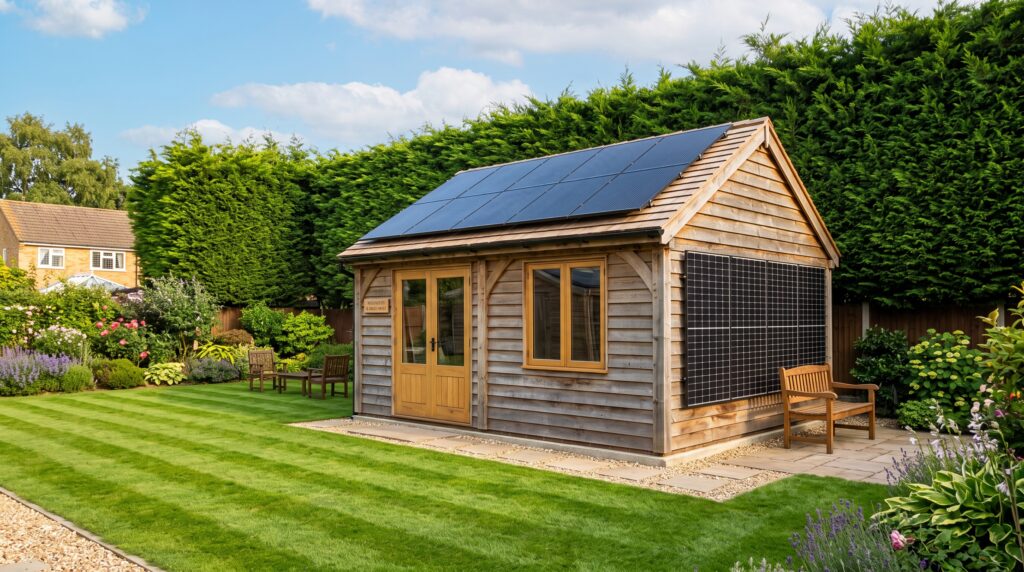
If your main house roof has awkward dormers, chimney shading, or faces north, look down your garden. A sturdy timber workshop, garden room, or shed can easily serve as your dedicated micro-generator.
- Direct Local Power: Electricity generated from an outbuilding can power garden lighting, outdoor tools, lawn equipment charging docks, or a garden office directly, with the excess exported back into your home consumer unit.
- Structural Racking: By using lightweight aluminium mounting rails secured directly across the structural rafters, the load is evenly distributed without overloading the timber structure.
- Discreet Appearance: For homeowners in conservation areas or anyone looking to preserve the front kerb appeal of their property, positioning panels on a rear garden outbuilding keeps the entire system completely out of sight.
3. Pre-Made Garden Ground Stands (Free-Standing Racks)
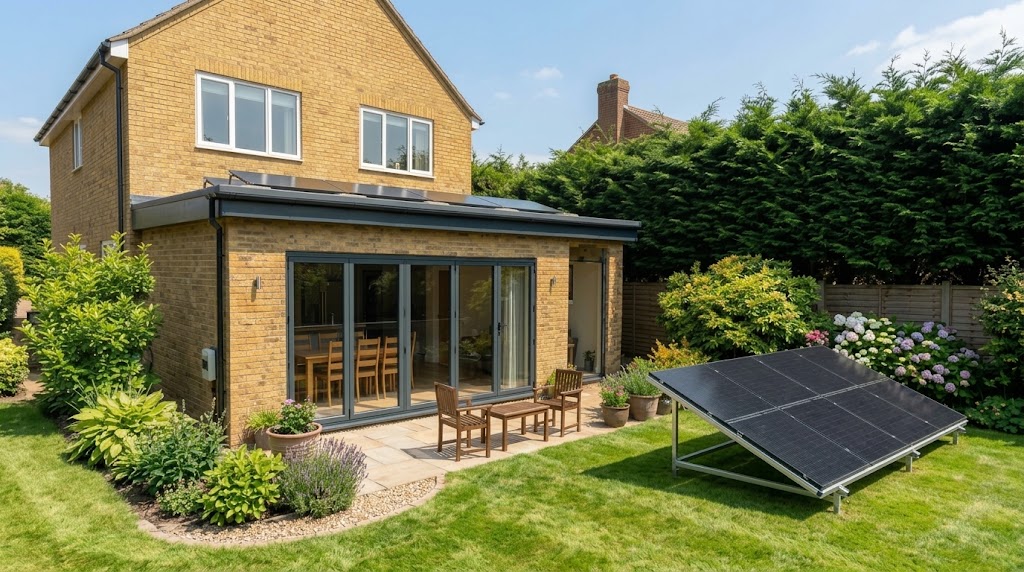
Don’t want panels fitted to any building at all? You don’t have to. Dedicated, pre-engineered ground stands allow you to install a compact solar array directly on your lawn, patio border, or gravel space.
- Optimised Efficiency: Ground racks give you 100% control over positioning. You can angle them for the exact solar sweet spot with zero spatial compromises.
- Superior Cooling & High Yield: Solar PV modules lose efficiency as they get overly hot during summer peaks. Ground-mounted panels benefit from natural 360-degree airflow around both the front and rear faces, running cooler and producing higher total kilowatt-hours.
- No Ugly Concrete Poured: Modern residential ground mounts use steel ground screws or surface-mounted ballast blocks. They hold firm through severe weather, leave your garden intact, and can be dismantled or relocated whenever you wish.
4. Solar Mounted on Fences and Boundary Walls
For homes with compact gardens, mounting solar vertically or angled along a sunny boundary fence or brick wall is an emerging, space-saving alternative.
Important Structural Advice: Standard overlap wooden fence panels from local DIY stores are not engineered to bear heavy mechanical loads or strong wind catches. Fence-mounted solar requires properly reinforced, heavy-duty support—such as 4×4 pressure-treated timber posts set in deep concrete, steel unistrut channels, or structural brick pillars.
Once sturdy structural uprights are installed, panels can sit flush against the boundary, catching morning or afternoon sun without taking up a single square inch of your lawn or patio.
What to Check Before You Begin
- Shading Analysis: Keep an eye on nearby garden trees, surrounding boundary greenery, or adjacent two-storey properties that might cast occasional shadows during peak midday hours. Healthy boundary hedges and conifers simply benefit from a light annual trim to maintain a neat shape while ensuring maximum solar exposure across your array. For local property boundary heights and permitted development limits, you can check the official guidelines on the Planning Portal.
- Proper Underground Cabling: Running power from an outbuilding or ground stand back to your house distribution board requires Steel Wire Armoured (SWA) cable buried at regulation depth with warning tape.
- Certified Inverter Matching: For split layouts (e.g. two panels on a shed and two on an extension), using microinverters or dual-MPPT inverters ensures shaded sections don’t drag down the rest of your generation.
- In the UK, checking with guidance from the Energy Saving Trust ensures your setup meets certified home standards.
Ready to Explore Solar for Your Property?
Whether it is a flat roof extension, an outbuilding, or a standalone ground mount, we design practical solar solutions tailored to your space.