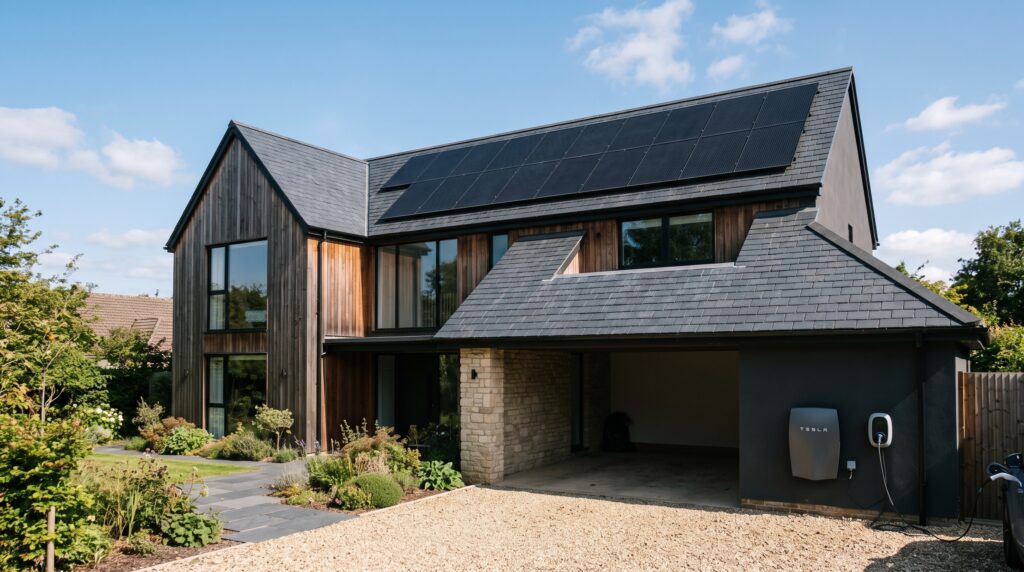
Navigating the solar panel VAT exemption is one of the most effective ways for UK homeowners to slash the upfront capital expenditure of a domestic renewable energy system. Under legislation introduced by HM Treasury to accelerate domestic decarbonisation, residential solar panels and battery storage systems currently benefit from a temporary zero-rate Value Added Tax (VAT) policy.
Whether you are fitting a brand-new rooftop solar array or adding standalone battery storage to an existing system, understanding the qualifying criteria ensures you do not overpay on your installation invoice.
What is the Solar Panel VAT Exemption?
Historically, energy-saving materials (ESMs) installed in UK residential properties were subject to a reduced VAT rate of 5%. To stimulate green home improvements and relieve consumer pressure from soaring wholesale electricity costs, the UK government implemented a complete zero-rating (0% VAT) on qualifying energy-saving installations.
The primary benefit is immediate: rather than applying for a complex tax rebate or waiting for a retrospective council grant, the zero-rate relief is applied directly by your installer onto the final supply-and-fit invoice.
Does Battery Storage Qualify for 0% VAT?
One of the most significant updates to HMRC guidance was the treatment of standalone energy storage.
Previously, a battery was only exempt from VAT if it was fitted concurrently with a new solar panel array. Homeowners wishing to retrofit battery storage to an existing solar system were penalised with the standard 20% VAT rate.
Following updated Treasury reforms, standalone domestic batteries now qualify for the full 0% rate when supplied and installed by a registered contractor. Whether you deploy an AC vs DC coupled battery system to capitalise on off-peak tariffs, the hardware and labour qualify for zero VAT.
Eligible vs Ineligible Equipment Under 0% VAT
To maintain compliance, the installation must satisfy specific HM Revenue & Customs (HMRC) criteria:
| Eligible (0% VAT Rate) | Ineligible (Standard 20% VAT) |
|---|---|
| Rooftop Solar Photovoltaic (PV) Panels | DIY Solar Kits bought without professional installation |
| Hybrid & String Solar Inverters | Commercial solar arrays on non-domestic properties |
| Domestic Battery Storage (New or Retrofit) | Scaffolding hired independently by the homeowner |
| Balance of System (Roof hooks, DC isolators, cabling) | Portable off-grid solar power stations or camping panels |
| Electrical labour, commissioning, and testing | Uncertified equipment or off-grid leisure vehicles (caravans/boats) |
Key Qualifying Conditions for UK Homeowners
To ensure your installation meets the zero-rating criteria, check the following conditions:
- Supply-and-Fit Only: You cannot buy solar panels or inverters off the shelf from an electrical wholesaler at 0% VAT and install them yourself. The exemption applies exclusively to a combined contract for the supply and installation of materials.
- Residential Property: The installation must take place on private residential accommodation, including detached homes, semi-detached properties, terraced houses, flats, and certain social housing developments.
- Grid Compliance: Systems must comply with relevant grid connection standards, including UK DNO G98 or G99 approval depending on inverter discharge capacity.
For the full legal statutory instrument and technical breakdown of qualifying energy-saving equipment, consult the official HMRC Notice 708/6: Energy-saving materials.
When Does the 0% VAT Policy End?
The current zero-rate relief on energy-saving materials was enacted with a designated sunset clause. The measure is scheduled to remain in effect across England, Scotland, and Wales until 31 March 2027.
Unless Parliament votes to extend or make the tax break permanent in an upcoming budget, residential solar and battery installations are slated to revert to the previous reduced rate of 5% VAT beginning 1 April 2027.
On an average £7,000 to £10,000 domestic solar-and-battery installation, the difference between 0% and 5% amounts to an immediate saving of £350 to £500—and over £1,400 compared to standard 20% rates.
Combining VAT Relief with Export Schemes
Taking advantage of the solar panel VAT exemption does not compromise your eligibility for ongoing government incentives or export revenue.
Once your zero-rated system is installed and commissioned with MCS certification, you remain fully eligible to enrol in the Smart Export Guarantee to sell your surplus generation back into the grid at competitive tariffs.
Curious about the full installation cost and payback timeframe for your roof? Use our Solar ROI & Cost Calculator to model realistic savings tailored to your property.